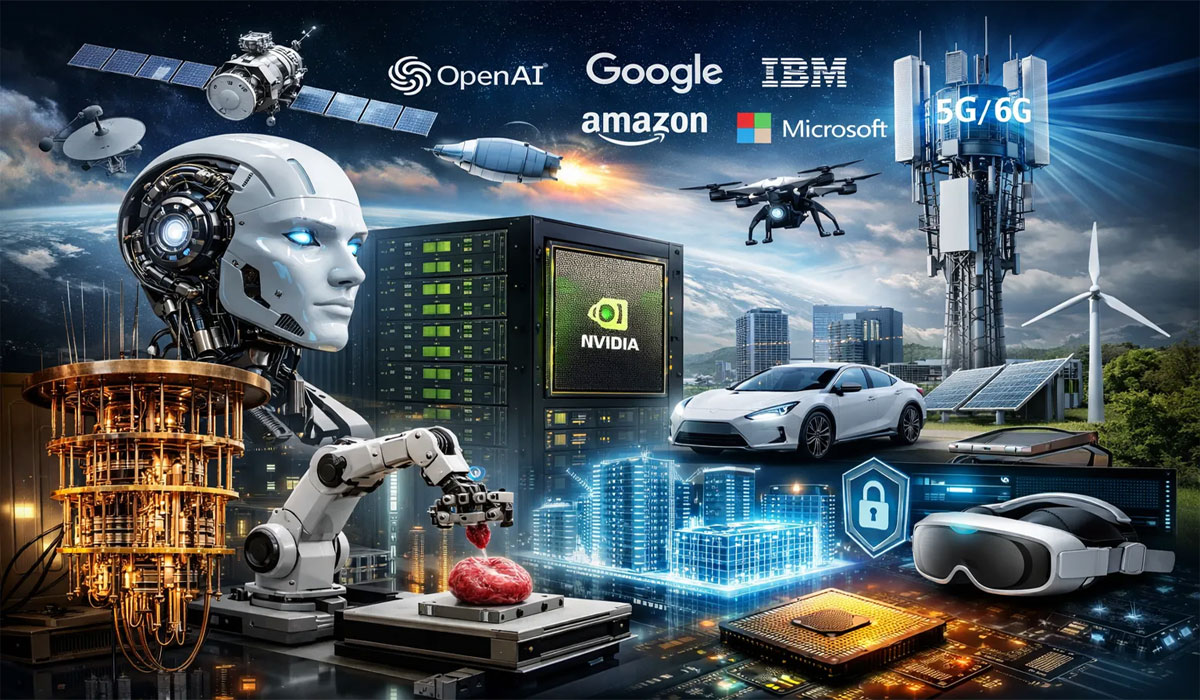
The Next Technology Revolution: How Advanced AI Is Reshaping Global Industries in 2026
The next technology revolution in 2026 is reshaping global industries through advanced AI, intelligent automation, robotics, and data-driven innovation that changes how businesses operate.
Technology is entering a new phase in which artificial intelligence, automation, and connected systems increasingly work together. These developments are influencing manufacturing, healthcare, finance, transportation, education, and other major sectors. Companies are exploring new ways to improve productivity, reduce operational delays, and develop services that respond more effectively to customer needs.
However, technological progress also creates challenges involving workforce adaptation, cybersecurity, infrastructure investment, and responsible innovation. Understanding these changes can help businesses and individuals prepare for an increasingly digital economy.
Discover a wide range of the latest information, breaking news, and in-depth reviews that will broaden your perspective on various engaging topics. Find out more, only at Tech Biz Time Nexus.
Advanced AI Is Transforming Business Operations
Artificial intelligence is moving beyond basic automation toward systems that can support complex workflows, analyze information, and assist with multistep tasks. Organizations are exploring these capabilities to improve decision-making and reduce repetitive administrative work.
Intelligent Systems and Automated Workflows
Advanced AI tools can help employees summarize research, prepare reports, analyze customer feedback, and coordinate routine business processes. When integrated with existing software, these systems can reduce manual effort and help teams manage large volumes of information.
Businesses still need clear approval procedures and human oversight, especially when automated systems handle sensitive data or influence important decisions. Reliable implementation requires testing, monitoring, and defined responsibilities.
Industry-Specific AI Applications
Different sectors are adapting AI to their operational needs. Manufacturers can use machine learning to identify equipment problems, financial institutions can detect unusual transactions, and logistics companies can analyze delivery routes and inventory patterns.
These applications can create measurable value when they address clearly defined problems. Organizations should evaluate data quality, operating costs, and expected benefits before expanding AI projects across their operations.
Robotics and Intelligent Automation
Robotics is evolving as machines gain better sensing capabilities, software integration, and automated control. These developments can help organizations perform repetitive, physically demanding, or highly precise tasks in controlled environments.
Modern Manufacturing and Warehousing
Factories use industrial robots for tasks such as assembly, welding, packaging, and inspection. In warehouses, automated systems can support inventory movement, sorting, and order preparation.
Automation may improve consistency and throughput, but companies must account for equipment costs, maintenance, workplace safety, and the skills needed to operate these systems. Successful adoption often combines machines with workers who supervise processes and solve unexpected problems.
Human-Robot Collaboration
Collaborative robots are designed to support certain tasks alongside human workers when appropriate safety measures are in place. They can assist with repetitive movements while employees focus on quality control, planning, and more complex activities.
Training is essential as workplaces introduce new equipment. Businesses should help employees understand operating procedures, emergency controls, and the limits of automated systems.
Healthcare Benefits From Data-Driven Innovation
Healthcare organizations are exploring AI to support medical image analysis, administrative tasks, research, and patient service management. These applications may help professionals process information more efficiently and identify patterns that deserve further investigation.
Supporting Clinical Work
AI systems can assist qualified clinicians by highlighting potential findings in medical images or organizing relevant patient information. Such tools may support clinical workflows, but their reliability depends on validation, data quality, and appropriate use.
Medical professionals must retain suitable oversight of diagnosis and treatment decisions. Patient safety, confidentiality, and transparent communication remain essential when healthcare providers introduce new technologies.
Also Read: Fashion Pillar Secrets: How Style Shapes the Entire Global Industry
Accelerating Research and Development
Computational tools can help researchers analyze large datasets, investigate potential drug candidates, and prioritize experiments. These capabilities may support scientific progress by directing attention toward promising research questions.
Digital predictions do not replace laboratory testing, clinical evaluation, or regulatory review. Researchers must verify results through established scientific methods before applying discoveries in real-world settings.
Connected Infrastructure and Smarter Cities
Connected sensors and data platforms are helping cities and infrastructure operators monitor traffic, energy consumption, water systems, and public facilities. These technologies can provide information that supports maintenance planning and service improvements.
For example, traffic monitoring systems can help transport planners identify congestion patterns, while smart energy controls can adjust electricity use according to demand. Effective deployment requires reliable infrastructure, secure networks, and careful consideration of public privacy.
Workforce Transformation and Emerging Skills
Advanced technologies are changing job responsibilities and increasing demand for digital literacy, analytical thinking, cybersecurity awareness, and technical problem-solving. Some tasks may become automated, while new responsibilities emerge around managing, evaluating, and maintaining digital systems.
Employers can prepare workers through practical training, reskilling programs, and clear communication about workplace changes. Individuals can strengthen their prospects by learning to use digital tools while developing creativity, collaboration, and critical thinking.
Challenges of the Next Technology Revolution
Advanced technologies can introduce risks involving biased decisions, inaccurate outputs, cyberattacks, and excessive dependence on automated systems. High implementation costs may also prevent smaller businesses from accessing the same capabilities as larger competitors.
Organizations should establish security controls, evaluate suppliers, monitor system performance, and maintain contingency plans. Governments, businesses, educators, and communities can also work together to promote responsible innovation and broaden access to digital skills.
Conclusion
The next technology revolution is reshaping global industries through advanced AI, robotics, connected infrastructure, and data-driven innovation. These developments offer opportunities to improve productivity, support research, and create new services, but they require careful implementation.
Businesses and individuals can prepare by strengthening digital skills, prioritizing cybersecurity, and evaluating technology according to its real-world value. Combining innovation with human expertise and responsible governance will be essential as industries adapt to the changing digital landscape.